1) Collin's Dictionary. (). English Dictionary Definition of “art”. Available: http://www.collinsdictionary.com/dictionary/english/art. Last accessed May 2012.
2) Dr David Whitehouse. (2001). Science shows cave art developed early.Available: http://news.bbc.co.uk/2/hi/science/nature/1577421.stm. Last accessed April 2012.
3) Tom Hormby. (2007). CGI Story: The Development of 3D Computer Graphics, 1974-94. Available: http://lowendmac.com/orchard/07/0403.html. Last accessed May 2012.
4) Andrew Reach. (). What is Digital Art?. Available: http://www.andrewreach.com/?page_id=137. Last accessed May 2012.
5) Loveish Kalsi. (2011). 100 Spectacular Digital Art Works From February 2011. Available: http://stylishwebdesigner.com/100-spectacular-digital-art-works-from-february-2011/. Last accessed April 2012.
Monday, April 30, 2012

Sunday, April 29, 2012
6. Digital art is Art
Although traditional artist argue that digital art is not 'real art' by comparing time, tools and costs, they are wrong. Digital art is the next step in a long line of art progression. Digital art still takes skill, time and creativity. Digital art is art.


Saturday, April 28, 2012
5. Anything and everything is art to the right audience.
Anything and everything is art to the right audience.
The boundaries of aesthetic value and artistic appreciation are always being pushed by artists willing to put their reputations on the line in hopes of their new styles being accepted by the masses.
Joseph Ducreux, a french Potrait painter pushed boundaries in the 17th century by painting extrodinairy portraits of himself and other willing subjects doing a variety of things from smiling broadly to yawning and greeting the viewer, all vastly different to portraits of the error where a slight smile was just coming into fashion.
Ducreux's work and skill gained him moderate acclaim in his time, even being commissioned to paint a portrait of Marie Antoinette, was dwarfed by his recent rise to popularity in recent years. His work has spread as an internet Meme recently in a generation where his skill and the interesting candor of his work could be truly appreciated.
The various veins of digital art are pushing the boundaries as artists of the past, like Ducreux. Artists are taking steps in more and more imaginative fields of science fiction and fantasy while pushing traditional categories.
Friday, April 27, 2012
4. Art is something that moves you
Art is made to move it's audience. Artists create art to try and communicate an emotion or ideal they are feeling to a wider audience.
Arguments made by backers of traditional art will argue that digital art it not 'real art' because of multiple reasons including a monetary value placed on the art work and and the tools used to produce it.
The costs of traditional art lie in the canvases, paint mediums and tools used to produce the work, costs that can run into the hundreds. Digital work has costs of it's own that often dwarf traditional pieces. These costs include computers, software and various peripherals used to interface with the computer.
One argument put forward is that the programs used to make the art 'do all of the work', because in a traditional medium an artist must use multiple tools and pallets. This argument is simply untrue, while the tools are different, so are the issues that arise from a digital medium.
Digital art is still produced a brush stroke at a time, layer by layer, observing all of the skills and education presented for a traditional work.
Another argument is that the digital format means there is no original hard copy and the digital artwork is easily multiplied and distributed and a traditional works . This argument goes against the base nature of art, a piece of artwork as a vehicle for expression of emotion and aesthetic value and has no inherent monetary value, so a digital works ability to be distributed widely and with low costs, meeting a wider audience, makes it no less 'art'.
Only when artwork is viewed as a commodity does it have a value, and digital artworks gain other values, like prints of existing traditional art work do for the original.
The truth is, on an artistic basis, Digital art can reach a wider audience,
Thursday, April 26, 2012
3. Art progresses with technology
Art has progressed with technology and the tools available to the artist.
The first examples of art were coloured clays used to draw on cave walls 30, 000 years ago, but since artists have moved from pictograms on pyramid walls to woven canvases and now onto a digital frontier.
Art exists in many forms, all over the world. It will evolve and change, but never cease.
Prehistoric people often represented their world- and perhaps their beliefs- through
visual images. Paintings, sculptures, engravings, and, later, pottery reveal not only a quest for beauty but also complex social systems and spiritual concepts.

For the Egyptians, art was associated with the creative process of the universe. Testimony to the intense cultural activity that characterized the predynastic period (с.5000-З00вс) exists in the form of "palettes".

And in their pyramids and sculptures.

Russian Architecture

The first manifestation of Celtic art appears on the objects found in more than a thousand graves excavated in Austria. In this Bronze Age phase the "art" consisted largely of functional but highly sophisticated metalwork designed for personal adornment and to embellish weapons, and horse and chariot fittings.


The dominance of the church insisted on the expression of biblical truths, during the middle age.
Art progressed through periods known as Early Renaissance, High Renaissance, Mannerism, Baroque, Rococo, Mannerism, Baroque and Rococo, all the way to Modern art.
There are many facets of ‘modern’ art as a result of the progression of art through history and culture. Even in traditional painting, different mediums can be used, like oils or watercolor. And different styles, such as:
Art Nouveau:

Cubism:

Art has and will continue to progress, develop and push boundaries as humans do with the subjects that inspire them and the mediums and tools available to them.
Wednesday, April 25, 2012
2. What is art?
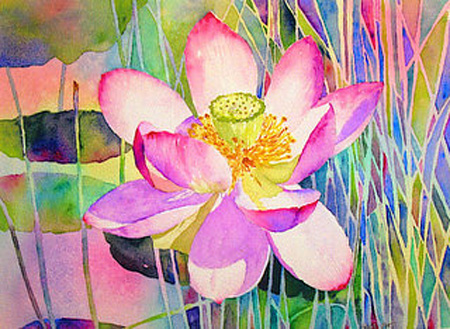
The Collins dictionary definines 'Art' as 'the creation of works of beauty or other special significance' and 'Fine Art' as 'art produced chiefly for its aesthetic value'.
These definitions explain the understanding that art is characterised as the expression or communication of emotion or other value, and that in the case of fine art it is expressed through a visual component like painting, sculpture, collage, decollage, assemblage, installation, calligraphy, music, dance, theatre, architecture, film, photography, conceptual art, and printmaking.

Digital art is a general term for a range of artistic works and practices that use digital technology as an essential part of the creative and/or presentation process.
This term describes anything from entirely computer generated works like fractal and algorithmic art through to scanned photographs and images drawn using graphics software and a mouse or tablet.
Monday, April 23, 2012
1. Digital art is art
Digital art has grown at an impressive rate over the last 30 years with the advent of the microprocessor and graphical user interface, both compelling pieces of an equation that made digital art more easily acceptable to the public in general and pushed advances in style and quality.
This growth and advance has not been without those who wish to oppose it though.
I shall discuss the bases and brief history of digital art, the beliefs of those who oppose it and wether what they say holds any credence or not.


Subscribe to:
Posts (Atom)